n105
The religion (or holiness) of the place. Wordsworth probably expects readers to ingest
this phrase on analogy with “genius loci.” In any case, his primary comparison is
between the ethos of the little churches he has described and the “religion” of local
nature itself.
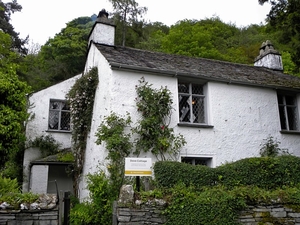
![Wordsworth’s musings recall a report from H.D. Rawnsley’s “Reminiscences of Wordsworth amongst the Peasantry of Westmoreland”: “Wudsworth was a great un for chimleys, had summut to say in the making of a deal of ’em hereabout. There was ’most of all the chimleys Rydal way build after his mind. I ’member he and the Doctor [Thomas Arnold] had great arguments about the chimleys time we was building Foxhow, and Wudsworth sed he liked a bit o’color in ’em….And heèd a great fancy an’ aw for chimleys square up hauf way, and round the t’other. And so we built ’em that how” (qtd. in Wordsworthiana, ed. Knight, 1889, p. 93). Photo of chimney near Grasmere: Paul Westover.](/sites/default/files/imported/editions/guide_lakes/images/Section_Second/Chimney_51Thumb.jpg)