
Addison, Lancelot, 1632-1703 (Library of Congress Name Authority)—
English clergyman, writer, traveler, and father of Joseph Addison.
English clergyman, writer, traveler, and father of Joseph Addison.
A poet and dramatist as well, Addison was the most popular of early eighteenth-century periodical essayist. He collaborated with Richard Steele on the Tatler (12 April 1709 to 2 January 1711), the Guardian (12 March to 1 October 1713), and especially the Spectator (1 March 1711 to 6 December 1712; second series, 18 June to 20 December 1714). He also conducted the Free-holder (23 December 1715 to 29 June 1716), the Whig Examiner (14 September to 12 October), and The Old Whig, which survived for only two numbers (19 March and 2 April 1719).
In Greek mythology and Homer's Illiad, a Greek hero of the Trojan War whose exceptional strength and valor made him almost unconquerable. Legend had it that his mother had dipped him in the River Styx, but inadvertently left one vulnerable spot, the heel by which she held him. He was killed by an arrow shot into this heel.
Friend, father-in-law, and successor of the Prophet Muhammad and the first Calaph of Islam.
Friend, father-in-law, and successor of the Prophet Muhammad and the first Calaph of Islam.
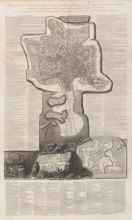
In this map of modern and ancient Rome, Piranesi includes an index with over 400 numbered items, many of which, after naming a monument, refer to his own etchings in other publications.
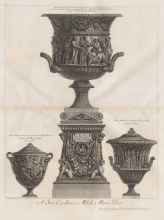
Piranesi’s interest in Roman antiquity, though concentrated on its architecture, also included domestic and ornamental objects. Late in his career, and with the help of sculptors and engravers, he freely “restored” recently discovered antiquities and then produced over 100 etchings indicating their provenance and acquisition.
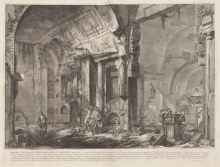
Piranesi’s Antichità Romane is a four-volume work whose images depict ruins, tombs, bridges, and masonry in vedute, plans, cross-sections, and close-ups. This image depicts the sepulchral chamber of freedmen and domestic slaves who labored for Lucius Arruntius.