n062
The unfortunate young man was Charles Gough (1784–1805), an artist from Manchester.
The story Wordsworth recalls here inspired his poem “Fidelity,” which he quotes later
in the Guide.
Also known as Saint Bede (c. 673–735), the monk often called “the Father of English
History.” His mention of Dacre (“Dacore”) appears in his Ecclesiastical History of England, chapter 32. At that time, Bede reports, the stream had a monastery beside it.
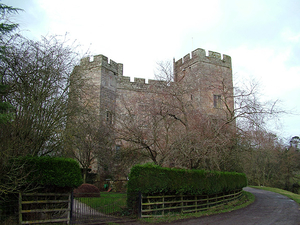
The “new” chapel mentioned by Wordsworth has since been replaced by a building constructed
in 1881 (All Saints Church, Watermillock). However, the tower at the building’s west
end dates from the 1550s. Bishop Owen Oglethorpe, who consecrated the fifteenth-century
building, was the lone clergyman willing to crown Elizabeth I in 1559 because of her
public Protestantism. He came to regret that decision. Queen Elizabeth imprisoned
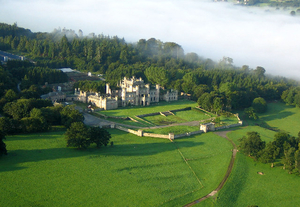
him months later, and he died a religious martyr. Photo: Bob Jenkins, Wikimedia Commons.
The yew tree survives, and it now stands nearby the Old Church Country Hotel (near
Watermillock). The site Wordsworth mentions should not be confused with Old St. Martin’s
Church, Martindale, which still stands and boasts its own ancient yew.
Kirkstone Pass, which connects Ambleside to Patterdale, is the Lake District’s highest
paved road, topping out at 1,489 feet (454 meters). The route is the subject of “Ode:
The Pass of Kirkstone,” which appears later in the Guide.