n158
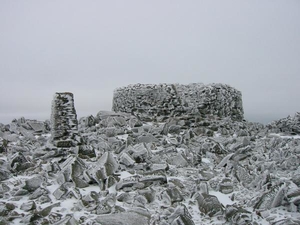
Seathwaite (Borrowdale) is the wettest inhabited place in England, receiving approximately
140 inches of rain per year. As the local guide leading Dorothy’s party remarked,
they were fortunate to have a clear day with spectacular views.
The account that follows does not draw, as Wordsworth seems to imply, from one of
his own letters, but instead from one of Dorothy’s, which she wrote to William Johnson
in October 1818. This letter, which Dorothy copied into one of her notebooks, recorded
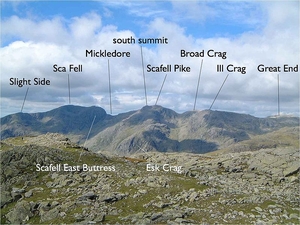
her recent excursion up Scafell Pike with her friend Mary Barker and three others.
Working from manuscripts in the Wordsworth Library, Owen and Smyser published this
incomplete work as an appendix to the Guide (“Appendix II: An Unpublished Tour”) in their 1974 edition of Wordsworth’s prose.
Wordsworth visited the Alps in 1790 with his friend Robert Jones and in 1820 with
Mary Wordsworth, Dorothy Wordsworth, and several friends.
The poem here cited is Walter Savage Landor’s “Ad Larium” (“To Lake Como”) from his
1820 collection of original Latin verse Idyllia Heroica (Heroic Idylls). Translated into English (by John Talbot), it reads:
![As Owen and Smyser suggest, this experience took place “not on ‘a calm September morning’ but on 17 November 1799, when [Wordsworth] was conducting Coleridge on his first trip to the Lake District.” While Lyulph’s Tower appears to be an ancient fortification, it was actually built in the late eighteenth century as a hunting lodge for the Duke of Norfolk. Photo: Martin and Jean Norgate, Old Cumbria Gazetteer.](/sites/default/files/imported/editions/guide_lakes/images/Miscellaneous/108-9_Lyulph's_TowerThumb.jpg)