n066

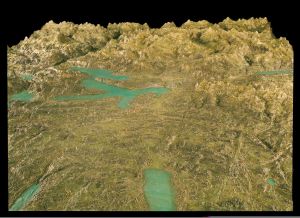
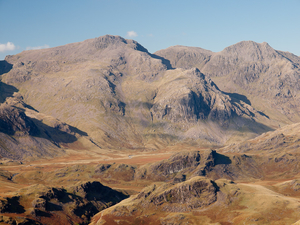
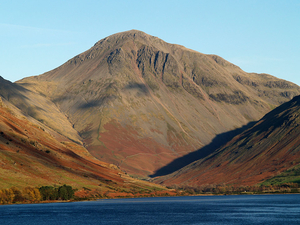
The cloud’s-eye vision Wordsworth conjures here is easy to understand with the help
of a map. Wordsworth was fond of this passage. In a letter to Lady Beaumont (10 May
1810), he wrote, “I am very happy that you have read the Introduction [to Select Views] with so much pleasure…. I though the part about the Cottages well-done; and also
liked a sentence where I transport the Reader to the top of one of the Mountains,
or rather to the Cloud chosen for his station, and give a sketch of the impressions
which the Country might be supposed to make on a feeling mind, contemplating its appearance
before it was inhabited.” Commentators have debated the originality of Wordsworth’s
wheel metaphor, but it seems to be his own invention (Owen and Smyser 388-89).
n063

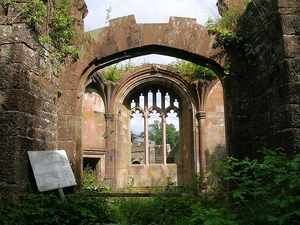
Brougham Hall was for a time the residence of Wordsworth’s kinsman, Captain John Wordsworth,
Sr. (1754–1819).

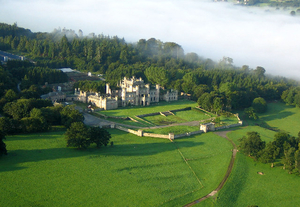
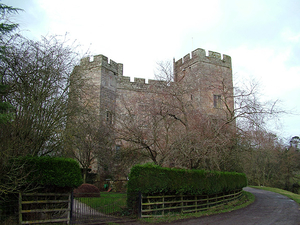
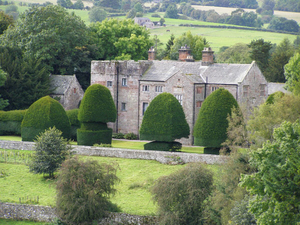
Situated just south of Penrith, near the junction of the Lowther and Eamont, this fourteenth-century building (known as “the Windsor of the North” in Victorian times) was saved from dereliction in 1985. Restoration efforts are underway. Photo: The chancellor’s study at Brougham Hall (Roger Griffith, Wikimedia Commons).

n061

The unfortunate young man was Charles Gough (1784–1805), an artist from Manchester.
The story Wordsworth recalls here inspired his poem “Fidelity,” which he quotes later
in the Guide.

n057

Also known as Saint Bede (c. 673–735), the monk often called “the Father of English
History.” His mention of Dacre (“Dacore”) appears in his Ecclesiastical History of England, chapter 32. At that time, Bede reports, the stream had a monastery beside it.