Home
Toggle menu
  • Home
  • Editions
    • Latest
    • Explore
  • Praxis
    • Latest
    • Explore
  • Gallery
    • Explore Latest Exhibits
    • Explore Past Exhibits
    • Explore All Images
  • Resources
    • Index of Authors
    • Booklists
    • Syllabus Repository
    • Timelines
  • About
    • Masthead
    • History
    • Index of Contributors
    • Submissions, Use & Citation Guidelines
    • Archived Material

The Organs of the Senses Familiarly Described, Plate 18

Image Item
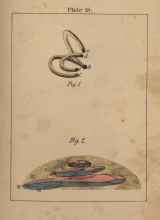
A diagram of the canals of the ear
Description

The series of plates given in this gallery depicts the ear and how it works. This image, Plate 18 of Bell's illustrations, depicts the semicircular canals of the ear. Bell further describes the image: "The cochlea is named by its similitude to the shell of a snail. It is the most difficult part of the ear to be described."
  • Read more about The Organs of the Senses Familiarly Described, Plate 18

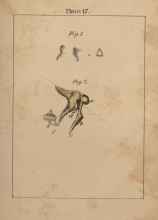
The Organs of the Senses Familiarly Described, Plate 17

Image Item
A diagram of the small bones of the ear
Description

The series of plates given in this gallery depicts the ear and how it works. This image, Plate 17 of Bell's illustrations, depicts the three small bones of the ear. Bell describes it as such:

  • Read more about The Organs of the Senses Familiarly Described, Plate 17

About This Edition

  • Read more about About This Edition


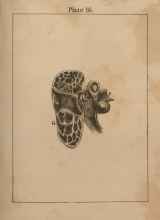
The Organs of the Senses Familiarly Described, Plate 16

Image Item
A diagram of the inner ear
Description

The series of plates given in this gallery depicts the ear and how it works. This image, Plate 16 of Bell's illustrations, depicts the inner ear. Bell describes it as such: "These are the mastoid cells. They are thought to strengthen the effect of the sound, by reverberating the air from the tympanum."

  • Read more about The Organs of the Senses Familiarly Described, Plate 16

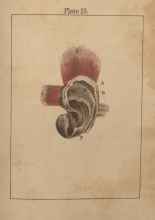
The Organs of the Senses Familiarly Described, Plate 13

Image Item
A diagram of an ear
Description

The series of plates given in this gallery depicts the ear and how it works. This image, Plate 13 of Bell's illustrations, depicts the ear without the skin. The numbers and their labels are given below:

A: the helix

B: the unnamed cavity

C: the antihelix

D: its cavity, called the scapha

  • Read more about The Organs of the Senses Familiarly Described, Plate 13

Making Sense of Sound

A diagram explaining various properties of sound
Date Published:
August 2023
Description

What does sound look like? How might it be visually represented? Can it be explained in a scientific diagram? This gallery seeks to explore these questions by examining the form and significance of the ways in which the Romantic period sought to incorporate the ephemeral, ineffable, and invisible element of sound into the visual register. Beginning with an anatomical depiction of the ear and its various parts, this gallery traces the new scientific developments assisting Romantic scientists in understanding how the ear itself functioned.

  • Read more about Making Sense of Sound

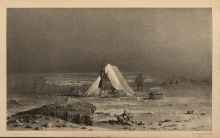
Western View From Near Mount Barrow

Image Item
A camp is set up in a foggy icescape
Description

A somewhat confounding image of men and their tents in a dense fog, Western View from near mount Barrow is perhaps as close to the so-called Arctic Sublime that Sir George Back comes in his work; and yet, other aspects of the sublime, such as fear, awe, and immensity, are notably missing.

  • Read more about Western View From Near Mount Barrow

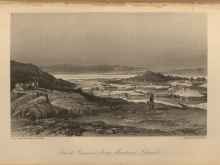
View to Seaward from Montreal Island

Image Item
View towards a frozen sea
Description

Another instance of meta-imagery in Sir George Back's work, View to Seaward from Montreal Island illustrates a quiet moment in the expedition and records without any great aesthetic flair both the landscape of the Canadian Arctic and the variety of people involved in the expeditions.

  • Read more about View to Seaward from Montreal Island

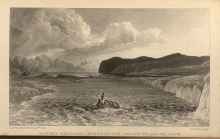
Victoria Headland, Mouth of the Thlew-ee-cho-de-zeth

Image Item
A small rowboat passes a glacier
Description

Sir George Back's Victoria Headland effectively places the British Empire in a relation of unique, solitary independence to the Arctic landscape which, rather than acting as an impediment to imperial movements, placidly funnels the explorers' rowboat along the river towards the sea.

  • Read more about Victoria Headland, Mouth of the Thlew-ee-cho-de-zeth

Portage in Hoarfrost River

Image Item
Men push a small boat out of a river
Description

One of Sir George Back's most unusual landscapes, Portage in Hoarfrost River is a vertically-oriented image that depicts several men trying to drag their canoe out of the river and up an extremely steep incline.

  • Read more about Portage in Hoarfrost River

Pagination

  • First page « First
  • Previous page ‹ Previous
  • …
  • Page 88003
  • Page 88004
  • Page 88005
  • Page 88006
  • Current page 88007
  • Page 88008
  • Page 88009
  • Page 88010
  • Page 88011
  • …
  • Next page Next ›
  • Last page Last »
Subscribe to


Masthead

About

Contact Us

sfy39587stp18