Seascapes and National Pride in Romantic Visual Culture
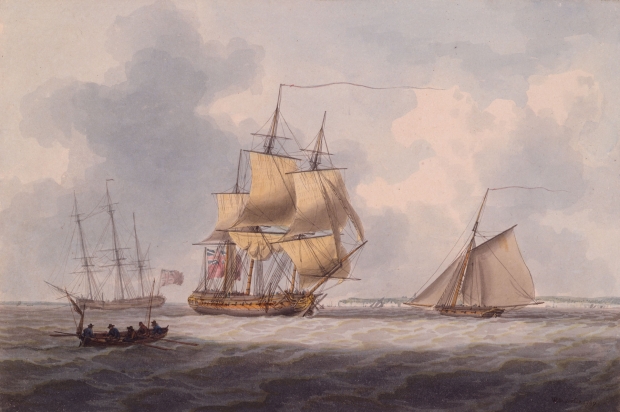
Even in a setting evocative of the mundane—such as that of laborers working through the night in JMW Turner’s
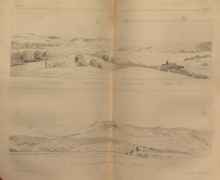
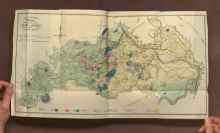
This portrayal of the Eifel mountain range further suggests that Romantic culture was developing an increasingly scientific interest in volcanism. The content of the image is neither sublime nor picturesque, yet the book it illustrates—a scientific work concerning the origins of volcanoes—sells very well and is consumed voraciously by the reading public.
This topographical portrayal of the Eifel mountain range suggests that Romantic culture was developing a more scientific interest in volcanism. The image evokes neither the sublime nor the picturesque, yet the book it illustrates—a scientific work concerning the origins of volcanoes—sells very successfully.
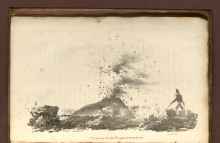
This depiction of Mount Vesuvius represents Romantic culture’s new, more scientific approach to volcanoes, which began to be seen as an attraction for volcanologists and tourists alike. As demonstrated by the human figure—who appears to be performing a hands-on investigation of sputtering lava—the image shows that one can successfully study volcanoes in action.
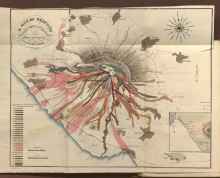
This portrayal of Mount Vesuvius’ previous lava flow hints that Romantic culture was cultivating a new interest in volcanism, bolstered by scientific advancements. The image’s significance is neither sublime nor picturesque, yet John Auldjo still drew, copied, and sold this map successfully.
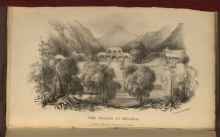
This image of Mount Helena marks a turning point for volcanic depictions in Romantic culture. The fear and awe once evoked by images of rampant volcanoes is little more; instead, Mount Helena is seen as powerless and at rest. One could draw a political parallel to Napoleon as he is also “at rest,” lacking the power he once possessed.