Home
Toggle menu
  • Home
  • Editions
    • Latest
    • Explore
  • Praxis
    • Latest
    • Explore
  • Gallery
    • Explore Latest Exhibits
    • Explore Past Exhibits
    • Explore All Images
  • Resources
    • Index of Authors
    • Booklists
    • Syllabus Repository
    • Timelines
  • About
    • Masthead
    • History
    • Index of Contributors
    • Submissions, Use & Citation Guidelines
    • Archived Material

River Landscape with Ruins

Image Item
River Landscape
Description

The landscape contains a winding river that passes by a group of ruined castles in the distance. In the foreground is a mass of trees on the left and groups of bushes and small trees in the center and right of the watercolor. The sky is misty with diffused light.

  • Read more about River Landscape with Ruins

The Romance of Ruins

Doctor Syntax tumbling into the water
Date Published:
June 2009
Description

In the eighteenth century, ruins all over the world were being rediscovered and reinterpreted aesthetically as their popularity and their importance as artistic subjects increased. An increase in travel and travel literature exposed British society to ruins both local and foreign, spurring interest in capturing their picturesque nature. At the same time, a growing awareness of historical documentation and scientific excavations of sites like Pompeii also affected the prevalence of ruins and commanded the attention of the Romantic audience. Frequently "created" as well as found, Romantic ruins invited spectators' reflections on transience, death, and decay. As such, ruins were a staple in Romantic landscape art and garden design. Goethe created at least one ruin in Weimar.

  • Read more about The Romance of Ruins

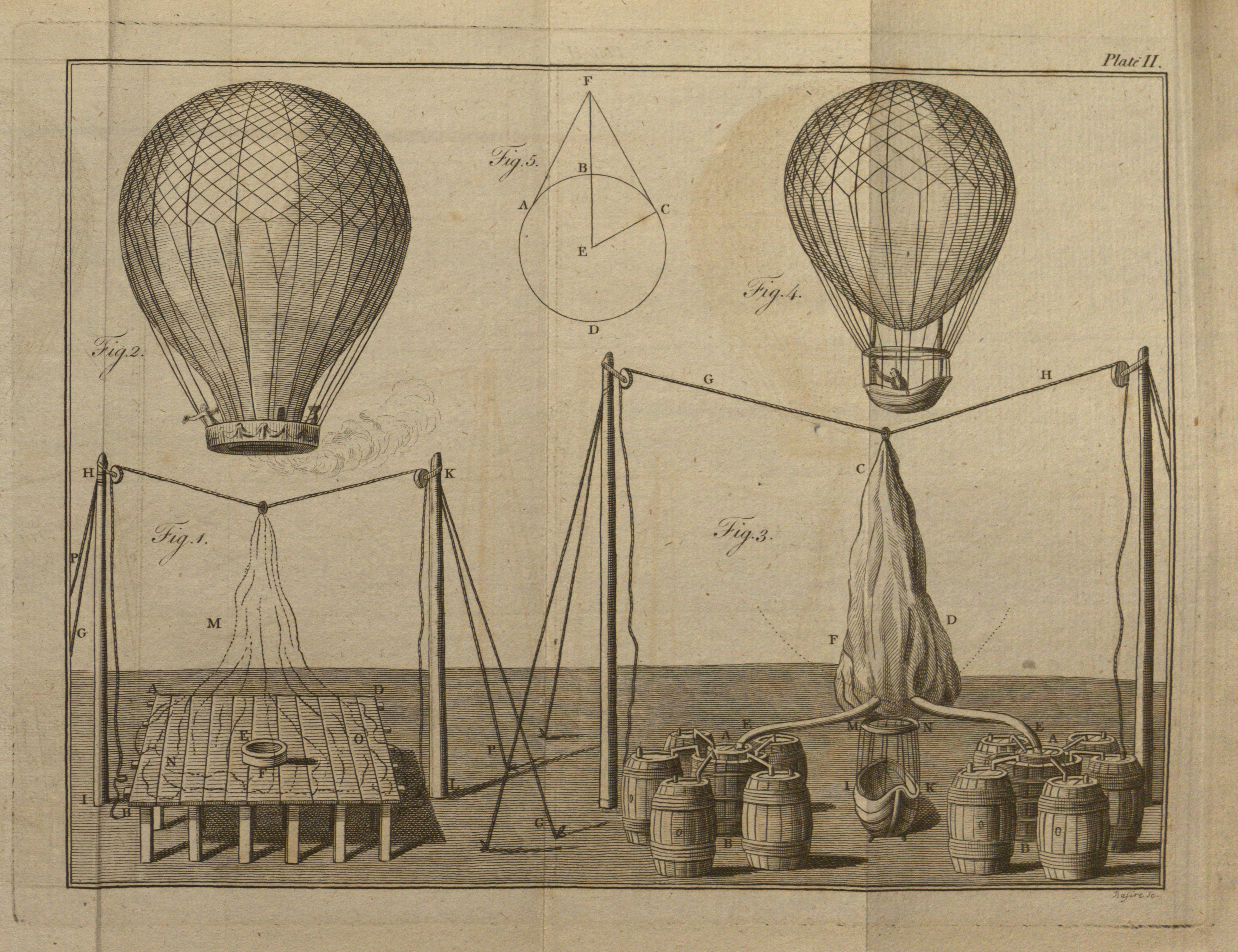
'Philosophical Playthings': The Spectacle of Air-Balloons

diagram explaining how hot air balloons are filled.
Curators
Paul Keen
Date Published:
June 2023
Description

Few cultural phenomena captured the popular imagination of late eighteenth-century Britain more intensely than the rage for air ballooning, or the “balloonomania” as critics sometimes called it. “The term balloon is not only in the mouth of every one, but all our world seems to be in the clouds,” declared a 1785 book titled London Unmask’d (137). The excitement had begun in France when the Montgolfier brothers launched the first human flight in front of the Royal Family and 100,000 spectators, on October 15, 1783. The first flight in England, by Vincento Lunardi the following September, attracted an estimated 150,000 spectators. The Morning Post reported that “St.

  • Read more about 'Philosophical Playthings': The Spectacle of Air-Balloons

Six Months Residence and Travels in Mexico

Image Item
No image available
  • Read more about Six Months Residence and Travels in Mexico

View of the City and the Valley of Mexico, from Tacubaya

Image Item
panoramic vista of Valley of Mexico.
Description

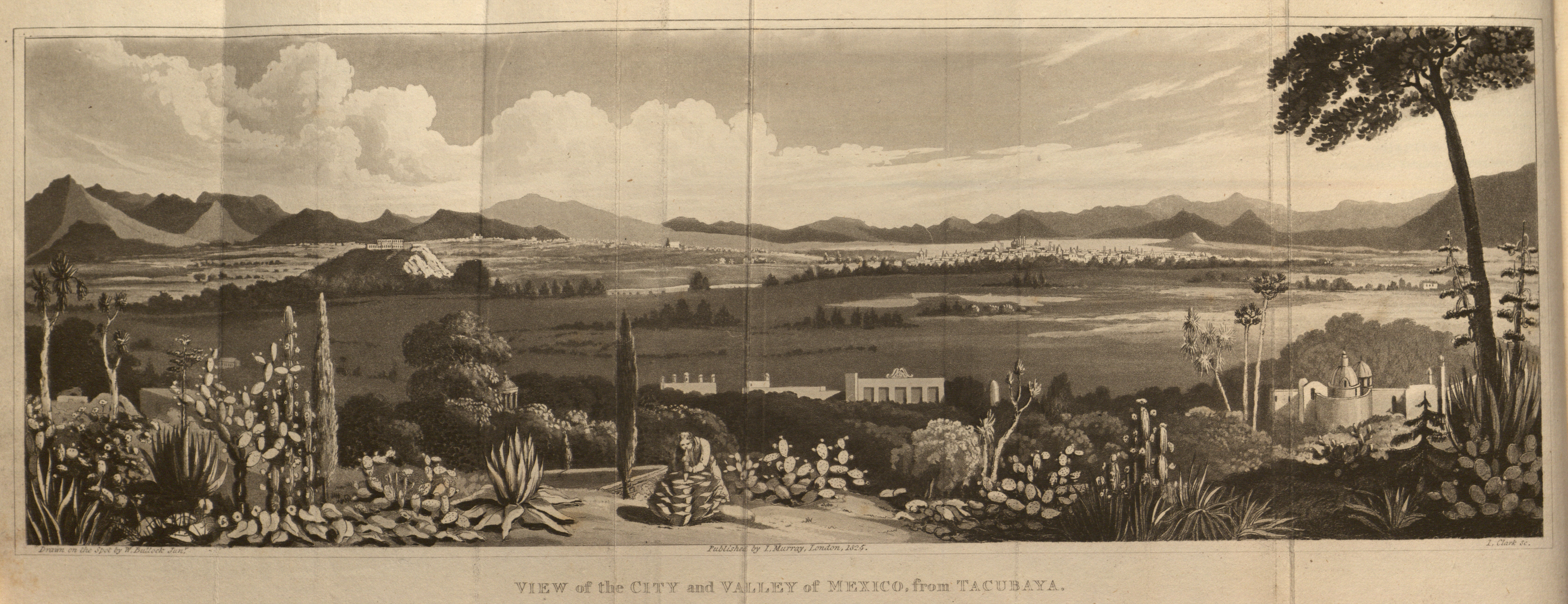
During the Romantic period, panoramas—particularly those of exotic places—emerged as a popular form of public entertainment (Comment 7-8).

  • Read more about View of the City and the Valley of Mexico, from Tacubaya

Vues des Cordillères: et Monumens des Peuples Indigènes de l’Amérique

Image Item
No image available
  • Read more about Vues des Cordillères: et Monumens des Peuples Indigènes de l’Amérique

Pyramide de Cholula

Image Item
pyramid
Description

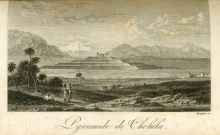
Other than maps, this is the only major landscape image Alexander von Humboldt produced in Mexico. It shows Humboldt's interest in Enlightenment notions of authentic re-creation and encyclopedic recording of native flora and fauna, while also invoking many of the concerns associated with Romantic notions of the picturesque landscape.

  • Read more about Pyramide de Cholula

Due Antichi Monumenti di Architettura Messicana

Image Item
No image available
  • Read more about Due Antichi Monumenti di Architettura Messicana

Untitled (Tav. 1; Pyramid at El Tajín)

Image Item
pyramid
Description

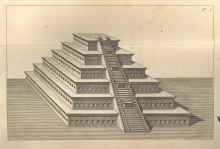
Pedro Marquez' 1804 book contains the first scientific illustrations of Mexican archaeology to be produced in Europe. By depicting the Pyramid at El Tajin with sharp, clean angles and a lack of geographic context, Marquez sought to visually tie it to Greek and Roman temples, thus showing the technological advancement and social sophistication of native Mexican peoples.

  • Read more about Untitled (Tav. 1; Pyramid at El Tajín)

Romantic Visualities and the Construction of Mexico, 1804-1844

ruins
Curators
Matthew Francis Rarey
Date Published:
June 2023
Description

This gallery explores the work of artists and explorers in Mexico and Central America between 1804 and 1844. Romantic explorers visually constructed Mexican history, archaeology, and geography in relation to Romantic conceptions of the picturesque landscape. Their depictions were further complicated by the contemporaneous tension between the visual technologies of the panorama and the camera lucida. Consequently, explorers in Mexico were forced to negotiate between the cultural implications of Romantic visualities—of the sublime and of the picturesque—and the values of Romantic exploration and enlightenment, such as encyclopedic recording and faithful representation.

  • Read more about Romantic Visualities and the Construction of Mexico, 1804-1844

Pagination

  • First page « First
  • Previous page ‹ Previous
  • …
  • Page 96229
  • Page 96230
  • Page 96231
  • Page 96232
  • Current page 96233
  • Page 96234
  • Page 96235
  • Page 96236
  • Page 96237
  • …
  • Next page Next ›
  • Last page Last »
Subscribe to


Masthead

About

Contact Us

sfy39587stp18