
Appendix 1
This appendix deals with two letters by Southey where the surviving manuscript is less complete than the version published by previous editors. In both cases, a transcript of the manuscript is in the main text of this edition.
This appendix deals with two letters by Southey where the surviving manuscript is less complete than the version published by previous editors. In both cases, a transcript of the manuscript is in the main text of this edition.
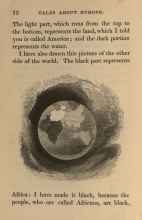
This rendering of Earth seems to depict each visible continent as the same "shade" of skin stereotypically used to describe its inhabitants. Consequently, this illustration serves as an example of the attempt to inculcate children with both a knowledge of the world and the proper perspective with which to view that world.
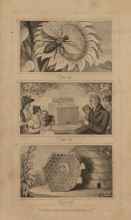
This illustration consists of three images: the top and bottom images ("1" and "3") depict the natural life of bees, while the middle image portrays the dissemination of knowledge concerning the life of the hive.
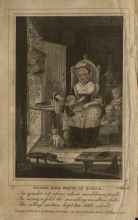
This book illustration depicts Henry Kirke White, one of the text's discussed literary celebrities, as a fragile-looking child; consequently, the image alludes to White's early death and the tragically brief duration of his brilliant and promising career.
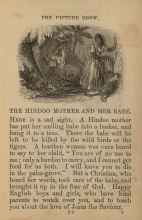
In this image, a Hindu woman abandons her baby in a basket hung from a tree. The illustration serves as a counterexample to the moral lesson of the accompanying text, while also serving as an example of the absence of "Christian" virtue in "pagan" cultures.
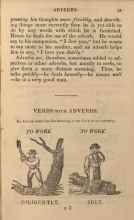
While the other illustration from Cobbin's Elements of English Grammar (the first image of the gallery) uses visual figures to personify discussed terms, this image provides a picture of the action described by the accompanying text: that is, the illustration acts as an example, rather than a symbolic representation, of the lesson.
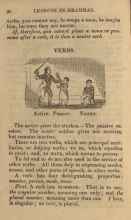
This image serves to visually illustrate and explicate a lesson plan in a grammar book. The accompanying text appears to be a lesson plan regarding verbs and their "properties." The image depicts three figures, each of which represents a different "voice" of verbs.