n068
This archaic appellation for the lake that is today almost universally called Windermere
was already fading by Wordsworth’s time. The name is believed to have derived from
the Old Norse name Vindandr. Hence Winandermere translates as “Vinandr’s Lake.”
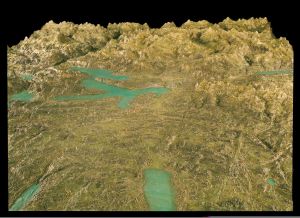
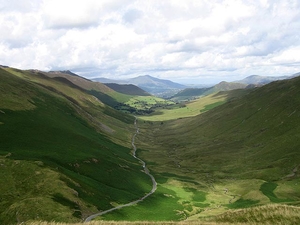
The cloud’s-eye vision Wordsworth conjures here is easy to understand with the help
of a map. Wordsworth was fond of this passage. In a letter to Lady Beaumont (10 May
1810), he wrote, “I am very happy that you have read the Introduction [to Select Views] with so much pleasure…. I though the part about the Cottages well-done; and also
liked a sentence where I transport the Reader to the top of one of the Mountains,
or rather to the Cloud chosen for his station, and give a sketch of the impressions
which the Country might be supposed to make on a feeling mind, contemplating its appearance
before it was inhabited.” Commentators have debated the originality of Wordsworth’s
wheel metaphor, but it seems to be his own invention (Owen and Smyser 388-89).
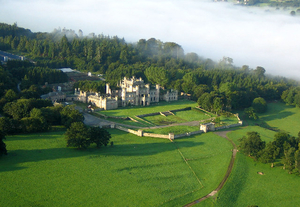
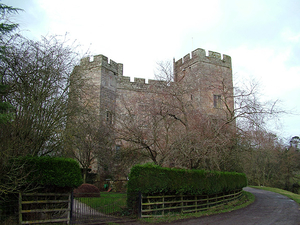
Brougham Hall was for a time the residence of Wordsworth’s kinsman, Captain John Wordsworth,
Sr. (1754–1819).
The unfortunate young man was Charles Gough (1784–1805), an artist from Manchester.
The story Wordsworth recalls here inspired his poem “Fidelity,” which he quotes later
in the Guide.