n106
Wordsworth here echoes Gray’s Elegy Written in a Country Churchyard: “Let not Ambition mock their useful toil, / Their homely joys, and destiny obscure;
/ Nor Grandeur hear with a disdainful smile, / The short and simple annals of the
poor” (29–32). Wordsworth expresses sentiments similar to those presented here in
his Essays Upon Epitaphs (written in 1809 and 1810, at about the same time as the letterpress for Select Views).
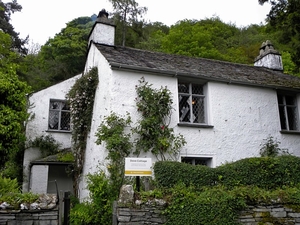
![Wordsworth’s musings recall a report from H.D. Rawnsley’s “Reminiscences of Wordsworth amongst the Peasantry of Westmoreland”: “Wudsworth was a great un for chimleys, had summut to say in the making of a deal of ’em hereabout. There was ’most of all the chimleys Rydal way build after his mind. I ’member he and the Doctor [Thomas Arnold] had great arguments about the chimleys time we was building Foxhow, and Wudsworth sed he liked a bit o’color in ’em….And heèd a great fancy an’ aw for chimleys square up hauf way, and round the t’other. And so we built ’em that how” (qtd. in Wordsworthiana, ed. Knight, 1889, p. 93). Photo of chimney near Grasmere: Paul Westover.](/sites/default/files/imported/editions/guide_lakes/images/Section_Second/Chimney_51Thumb.jpg)