
Moonlight, Uxmal Ruins
Image Item

Description
This lithograph depicts a portion of the ruins of Uxmal.
This lithograph depicts a portion of the ruins of Uxmal.
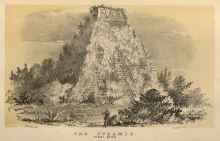
This lithograph depicts a portion of the ruins of Uxmal.
A single large pyramid stands covered in vegetation, crowned by a small, exposed temple. The pyramid is surrounded by a variety of trees and bushes, and is fronted by a small clearing. Two men stand in the center foreground, one gazing up at the pyramid while the other kneels beside him.
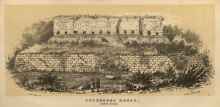
This lithograph depicts a portion of the ruins of Uxmal.
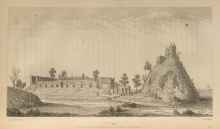
This image—rendered using a camera lucida—depicts ruins of the city of Uxmal in Mexico.
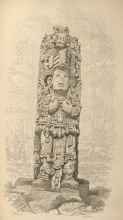
This image—rendered using a camera lucida—depicts a monument from the pre-Columbian Maya city, Xukpi, now known as Copán.
A large stone stela, facing forward, depicts a Maya deity decorated with myriad visual embellishments, its fists clenched upon its chest. The background depicts the small clearing in which the stela now stands, fading back into a thick forest.
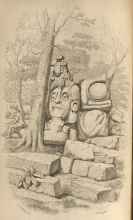
This image—rendered using a camera lucida—depicts a monument from the pre-Columbian Maya city, Xukpi, now known as Copán.

This image, created by Robert Burford, gives panoramic views of both the Temple of Karnak and the city of Thebes. It was based upon the original drawings of Frederick Catherwood, unique in that they were created with the help of a camera lucida.
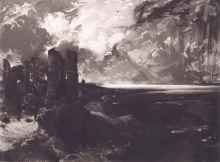
This image depicts the ruins of Hadleigh Castle. A reformulation of Constable's earlier painting of the same scene, this mezzotint explores new possibilities for the symbolic manipulation of landscape, specifically through the application of chiaroscuro.
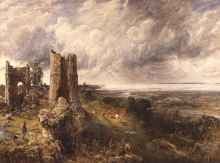
This image depicts the ruins of Hadleigh Castle in Essex, England.
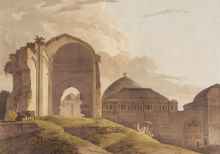
This image depicts the ruins of the palace at Madurai, the oldest city in India. The palace itself was erected in 1636, and is represented here against a new, British-built structure that constitutes the background of the painting.