Home
Toggle menu
  • Home
  • Editions
    • Latest
    • Explore
  • Praxis
    • Latest
    • Explore
  • Gallery
    • Explore Latest Exhibits
    • Explore Past Exhibits
    • Explore All Images
  • Resources
    • Index of Authors
    • Booklists
    • Syllabus Repository
    • Timelines
  • About
    • Masthead
    • History
    • Index of Contributors
    • Submissions, Use & Citation Guidelines
    • Archived Material

View in the Roman Forum (The Temple of Peace)

Image Item
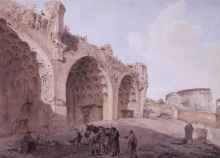
Ruins of the Temple of Peace
Description

Cutting a nearly perfect diagonal across the picture plane from the top left corner, the ruins of the Temple of Peace, or Basilica of Maxentius, loom large on the canvas, casting a shadow on the groups of peasants and ghosts that have gathered at the foot of the ruin.
  • Read more about View in the Roman Forum (The Temple of Peace)

Street of Tombs, Pompeii

Image Item
Street of Tombs in Pompeii
Description

This painting depicts the Street of Tombs in Pompeii, Italy, with Mount Vesuvius in the background.

  • Read more about Street of Tombs, Pompeii

View of Tintern Abbey

Image Item
Ruins of Tintern Abbey
Description

A view of the ruins of Tintern Abbey.

  • Read more about View of Tintern Abbey

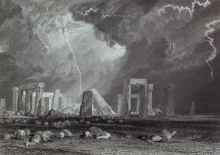
Stone Henge

Image Item
Stonehenge
Description

This image depicts the famous ruins of Stonehenge, but does so in a unique way. A line-engraving of J.M.W Turner’s Stone Henge, it is an image that simultaneously adheres to notions of the Romantic picturesque and undermines the expectations of the artistic technique made popular by Gilpin.

  • Read more about Stone Henge

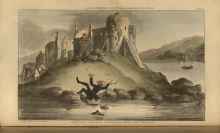
Doctor Syntax Tumbling into the Water

Image Item
Doctor Syntax Tumbling into the Water
Description

Dr. Syntax falls backward off his rocky seat into the water. Though his hat has fallen into the water, he still clutches his pen and journal: he has evidently been sketching the moss-covered ruins of the castle crowning the small hill before him. To the right of the ruin a ship sails on the water, more hills rising behind it in the distance. On the left side of the print, Dr.

  • Read more about Doctor Syntax Tumbling into the Water

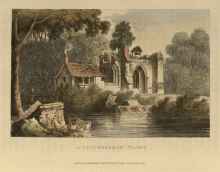
A Picturesque Dairy [Plate XI]

Image Item
A Picturesque Dairy
Description

The work depicts a “building designed in imitation of the ruins of a church or chapel…intended to be placed, as those houses generally are, by the side of a piece of still water…or built by the side of a river… in a retired part of a gentleman’s estate, who farms his own land, and has an extensive dairy-farm under his own direction, and who would build it to be at one and the same time an objec

  • Read more about A Picturesque Dairy [Plate XI]

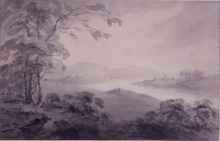
River Landscape with Ruins

Image Item
River Landscape
Description

The landscape contains a winding river that passes by a group of ruined castles in the distance. In the foreground is a mass of trees on the left and groups of bushes and small trees in the center and right of the watercolor. The sky is misty with diffused light.

  • Read more about River Landscape with Ruins

The Romance of Ruins

Doctor Syntax tumbling into the water
Date Published:
June 2009
Description

In the eighteenth century, ruins all over the world were being rediscovered and reinterpreted aesthetically as their popularity and their importance as artistic subjects increased. An increase in travel and travel literature exposed British society to ruins both local and foreign, spurring interest in capturing their picturesque nature. At the same time, a growing awareness of historical documentation and scientific excavations of sites like Pompeii also affected the prevalence of ruins and commanded the attention of the Romantic audience. Frequently "created" as well as found, Romantic ruins invited spectators' reflections on transience, death, and decay. As such, ruins were a staple in Romantic landscape art and garden design. Goethe created at least one ruin in Weimar.

  • Read more about The Romance of Ruins

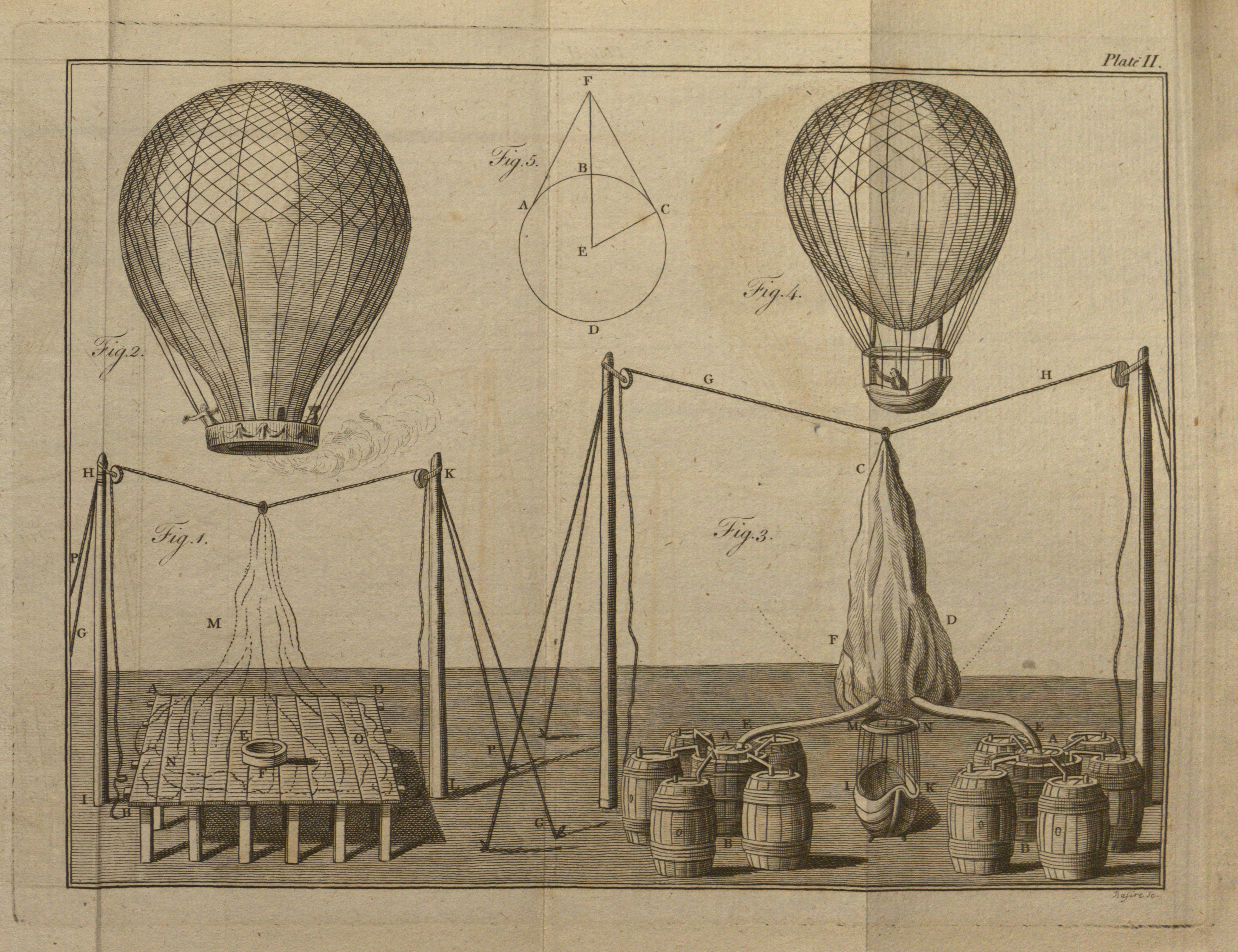
'Philosophical Playthings': The Spectacle of Air-Balloons

diagram explaining how hot air balloons are filled.
Curators
Paul Keen
Date Published:
June 2023
Description

Few cultural phenomena captured the popular imagination of late eighteenth-century Britain more intensely than the rage for air ballooning, or the “balloonomania” as critics sometimes called it. “The term balloon is not only in the mouth of every one, but all our world seems to be in the clouds,” declared a 1785 book titled London Unmask’d (137). The excitement had begun in France when the Montgolfier brothers launched the first human flight in front of the Royal Family and 100,000 spectators, on October 15, 1783. The first flight in England, by Vincento Lunardi the following September, attracted an estimated 150,000 spectators. The Morning Post reported that “St.

  • Read more about 'Philosophical Playthings': The Spectacle of Air-Balloons

Six Months Residence and Travels in Mexico

Image Item
No image available
  • Read more about Six Months Residence and Travels in Mexico

Pagination

  • First page « First
  • Previous page ‹ Previous
  • …
  • Page 89288
  • Page 89289
  • Page 89290
  • Page 89291
  • Current page 89292
  • Page 89293
  • Page 89294
  • Page 89295
  • Page 89296
  • …
  • Next page Next ›
  • Last page Last »
Subscribe to


Masthead

About

Contact Us

sfy39587stp18