
Off the Normandy Coast
Image Item

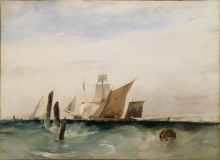
Richard Parkes Bonington's Seapiece is an example of Romantic-era depictions of the sea as an unpredictable force. The motion of the waves and the leaning of the smaller vessels help to create this effect. Various ships are visible in the distance, and one ship in full sail sits directly beyond the coastal waters.
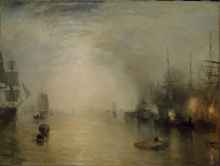
Keelmen Heaving Coals by Midnight was comissioned by cotton-spinner Henry McConnell along with the painting Venice: The Dogana and San Giorgio Maggiore. It was meant to show Britain's rise as a mercantile power beside the decline of the once dominating Venice (J. Hamilton, Late Seascapes 31, 34).
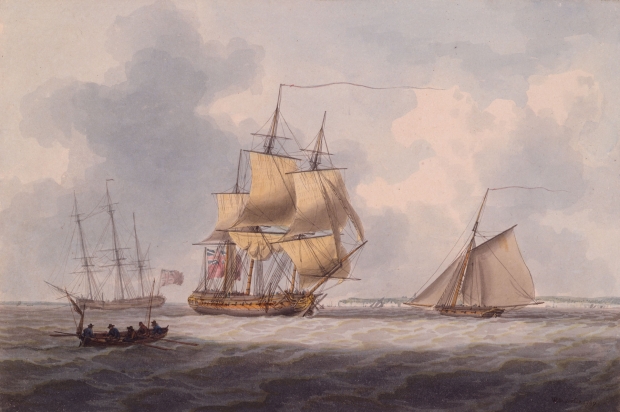
Even in a setting evocative of the mundane—such as that of laborers working through the night in JMW Turner’s
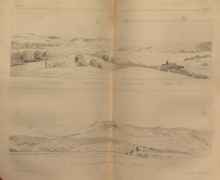
This portrayal of the Eifel mountain range further suggests that Romantic culture was developing an increasingly scientific interest in volcanism. The content of the image is neither sublime nor picturesque, yet the book it illustrates—a scientific work concerning the origins of volcanoes—sells very well and is consumed voraciously by the reading public.
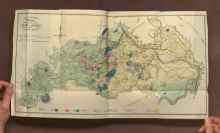
This topographical portrayal of the Eifel mountain range suggests that Romantic culture was developing a more scientific interest in volcanism. The image evokes neither the sublime nor the picturesque, yet the book it illustrates—a scientific work concerning the origins of volcanoes—sells very successfully.