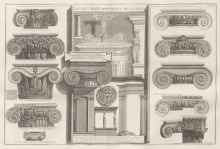
Roman Ionic Capitals
Image Item
Description
This composite image assembles Ionic column capitals from various buildings in Rome in order to argue for the superiority and the magnificence of Roman as opposed to Greek architecture. His argument relies on fragments of texts and buildings. Visual citations and architectural details serve as his bibliographical and graphical evidence.