
Ancient Circus
Image Item
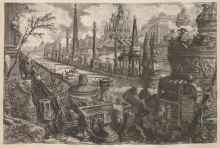
Description
This fantastical image is an imaginative reconstruction of the Circus Maximus, a lost ancient site devoted to public spectacle.
This fantastical image is an imaginative reconstruction of the Circus Maximus, a lost ancient site devoted to public spectacle.
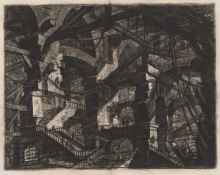
This etching includes a prominent instance of the architectural impossibilities that appear throughout the Carceri. “The Gothic Arch,” the title bestowed by later scholars, refers to the pointed arch that nearly meets the upper margin of the image.
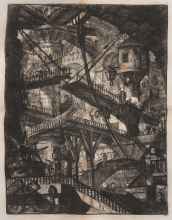
Piranesi’s Carcerid’Invenzione is a series of 16 menacing, mysterious etchings that depict impossible architectural structures inhabited by laboring, manacled, or tortured men. The series originally appeared in the 1740s as Invenzioni capric. di Carceri., including an abbreviation of “capriccio” [“caprice” or “fancy”].
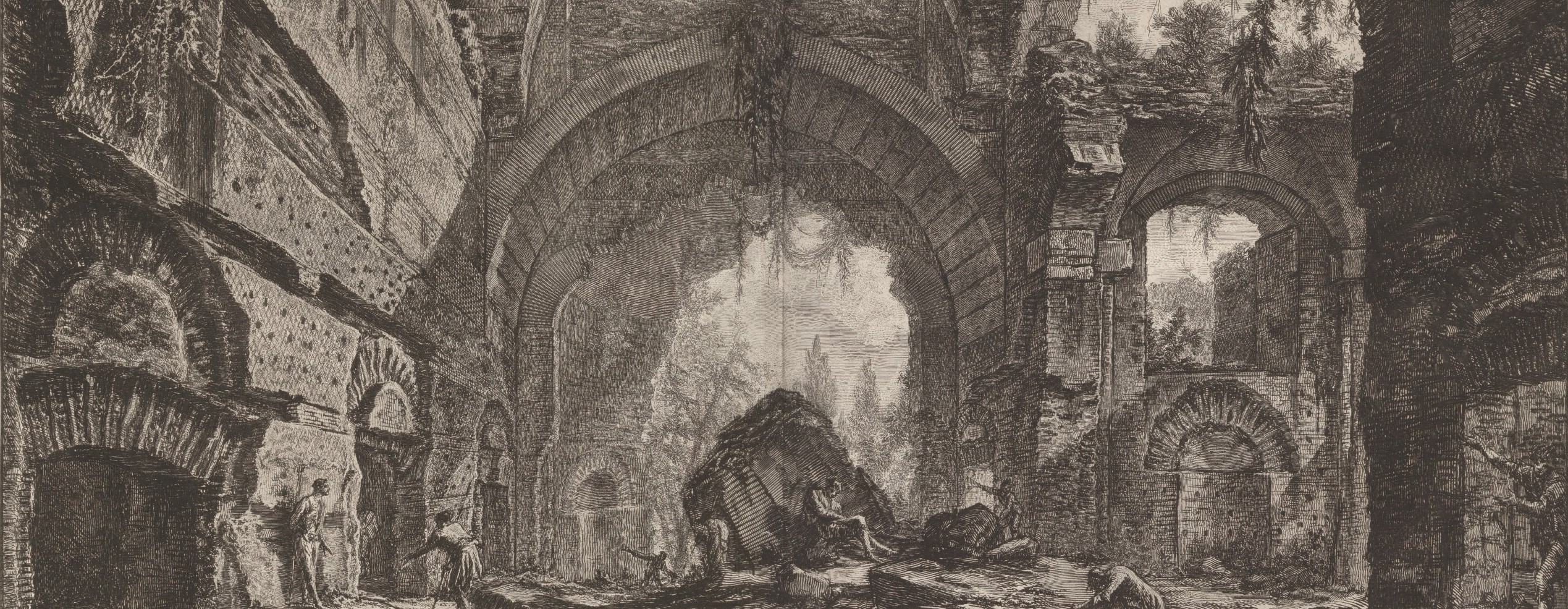
Students and scholars of British Romanticism likely know the work of Giovanni Battista Piranesi (Italian, 1720-1778) through at least one of two lenses: the gaze of the grand tourists or the hallucinations of Thomas De Quincey’s English opium eater. His architectural studies of Rome’s scenic ruins, urban vistas, and archaeological marvels nourished the cultures of antiquarianism and tourism as well as the cults of the ruin and the Romantic artist. His Carceri d’invenzione, or “Imaginary Prisons,” constitutes a key series of critical prints that together suggest parallels between architectural and mental spaces that strain beyond reality, reach beyond received ideas of structure and even gesture, perhaps, to the human imagination itself.